- calendar_today August 23, 2025
.
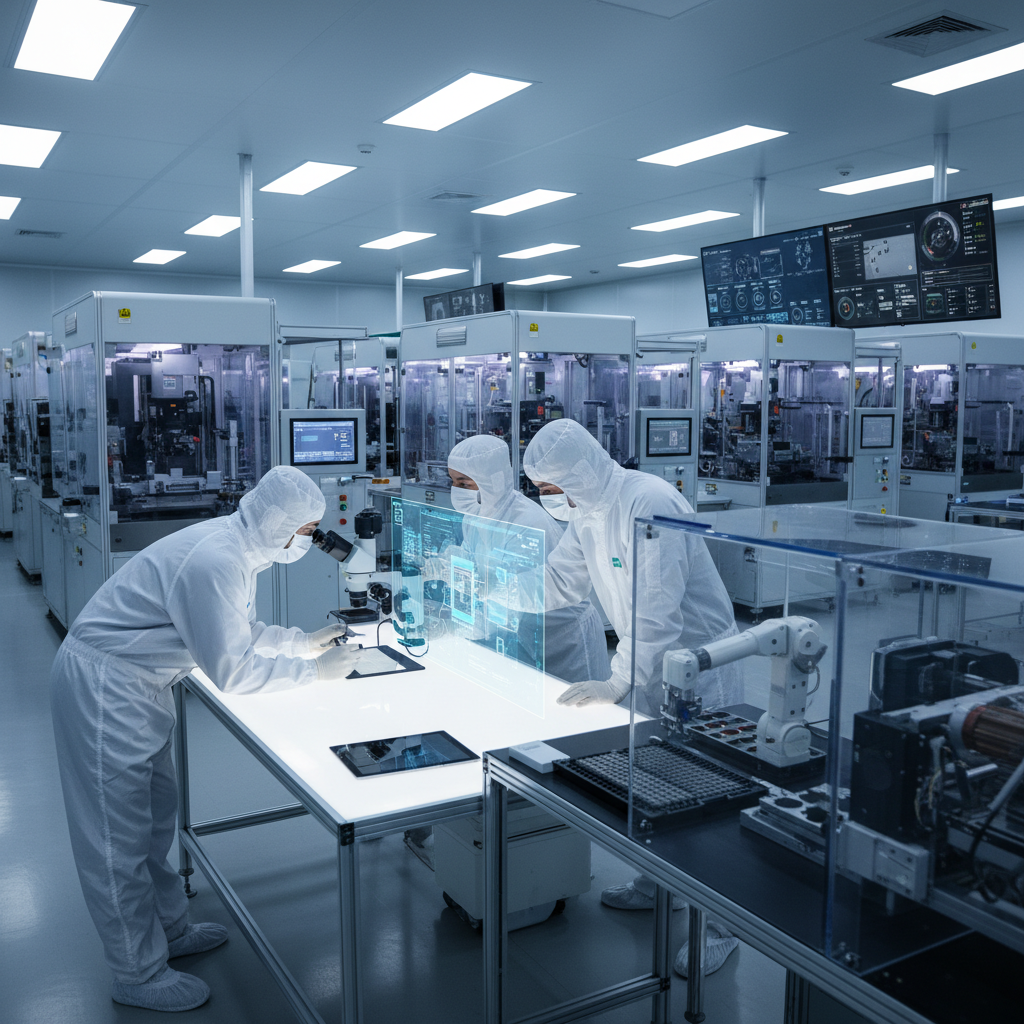
In a blow to Republican orthodoxy on corporate ownership, the federal government is now the largest shareholder in Intel, the floundering U.S. chipmaker. On Monday, President Donald Trump approved a 10% stake in the world’s second-largest semiconductor manufacturer, overturning decades of Republican economic policy and setting off a round of soul-searching among conservatives who typically support the former president.
Trump on Tuesday defended his move to invest in Intel as “very smart, great investment,” saying the government would now become “richer and richer.” “I hope I’m going to have many more cases like it,” Trump said. The Wall Street Journal reported that Trump had previously pushed Intel CEO Lip-Bu Tan to resign over past associations with China. The president ultimately backpedaled on that demand after meeting with Tan in the Oval Office. “I liked him a lot, I thought he was very good,” he said. “I ended up saying, ‘No, we’ll give you a pass.’ I will tell you that, because I like our country.”
If there is a silver lining to the Intel purchase from Trump’s point of view, it is that the president seems unrepentant. The federal government’s 10% stake in Intel may be just the beginning. “This is nothing new,” Trump said on Tuesday, comparing the government’s role in Intel to what economists once called industrial policy — that is, direct government ownership and participation in major industries, in contrast to more market-based approaches. “We have to start going down that road,” he said.
The Intel purchase has had many conservatives asking the same question, one that some economists have been posing for decades: At what point does it become socialism? For at least 60 years, part of the definition of socialism has been government ownership of the means of production for society’s benefit. By that standard, Trump’s Intel purchase is not all that different from what governments do in countries like China or Russia.
But the political irony here is hard to miss. During the Great Financial Crisis of 2008–2009, then-President Barack Obama’s decision to take over Chrysler and General Motors in those dark days was seen by conservatives as a forced nationalization at the last minute to rescue two iconic American companies from extinction. If Obama had taken a 10% stake in Intel at the time, some Trump allies say conservative media would have denounced him as a communist.
But Trump has made the case that Intel is not really a bailout at all but an investment. “We have invested $10 billion to $11 billion, and we got a return of $10 billion to $11 billion,” he said Tuesday. “Why are ‘stupid’ people unhappy with that?” Trump, he added, took a relatively small equity stake in exchange for nearly $9 billion in grants to the company that the federal government already had to spend because they were sent to Intel under President Joe Biden’s bipartisan Chips Act. In other words, Trump turned money Intel was going to get anyway into stock that would make the U.S. government the largest shareholder, thereby creating an additional $10 billion to $11 billion in immediate value for taxpayers, Trump said.
But that explanation has not appeased some top conservatives. Trump’s former top economic adviser, Larry Kudlow, said on Fox Business he was “very, very uncomfortable with that idea.” Steve Moore, another informal Trump adviser, was blunter: “I hate corporate welfare. That’s privatization in reverse. We want the government to divest of assets, not buy assets. So terrible, one of the bad ideas that’s come out of this White House.”
One editorial in the conservative National Review argued that “government shouldn’t get into the chip business.” South Carolina Senator Thom Tillis, who is up for reelection this year, said Tuesday that the deal was “concerning in many ways because it does begin to risk a semi-state-owned enterprise a la CCCP.” Rand Paul, also running for reelection in a battleground state, echoed that reference to the Soviet Union in a tweet: “Wouldn’t the government owning part of Intel be a step toward socialism? Terrible idea.”
On the other side of the political aisle, however, Senator Bernie Sanders praised Trump’s Intel decision. Sanders has argued for years that the government has every right to use its power to pick winners and losers in a strategic industry that has global implications.
Commerce Secretary Howard Lutnick was there for Trump on Laura Ingraham’s show on Tuesday. “That is not socialism,” Lutnick said. “That’s the best businessman in the United States of America in the Oval Office doing fair things for us.” Asked why Trump hadn’t expanded his equity stake in Intel to 50%, Lutnick demurred: “Let’s just say this is the first of many steps,” he said.
For Intel, however, there are real downsides, the company noted in a required SEC filing Tuesday. The filing says the arrangement could “reduce the likelihood of future grants from the U.S. government,” “negatively impact our international sales and reputation,” and subject the company to more government regulation. Intel also announced earlier this year that it would slash 15% of its workforce, on top of previously announced job cuts. Intel’s market capitalization is currently around $110 billion — though down 50% since January 2024. But the stock price ticked up 4% Tuesday following Trump’s announcement.
Trump on Tuesday again claimed credit for Intel’s sale as further evidence that he is turning around the American economy. But he has now turned an investment that the federal government already had to make into a showcase for his economic policy. Taxpayers, if they are right to be worried about the implications of the president taking the biggest share of a company, can look forward to more Trump-style government corporatism in the future. After Intel stabilizes, if it stabilizes, Trump will surely take credit for fixing the American chip industry, but if Intel continues to struggle, taxpayers will be left holding the bag.