- calendar_today August 20, 2025
.
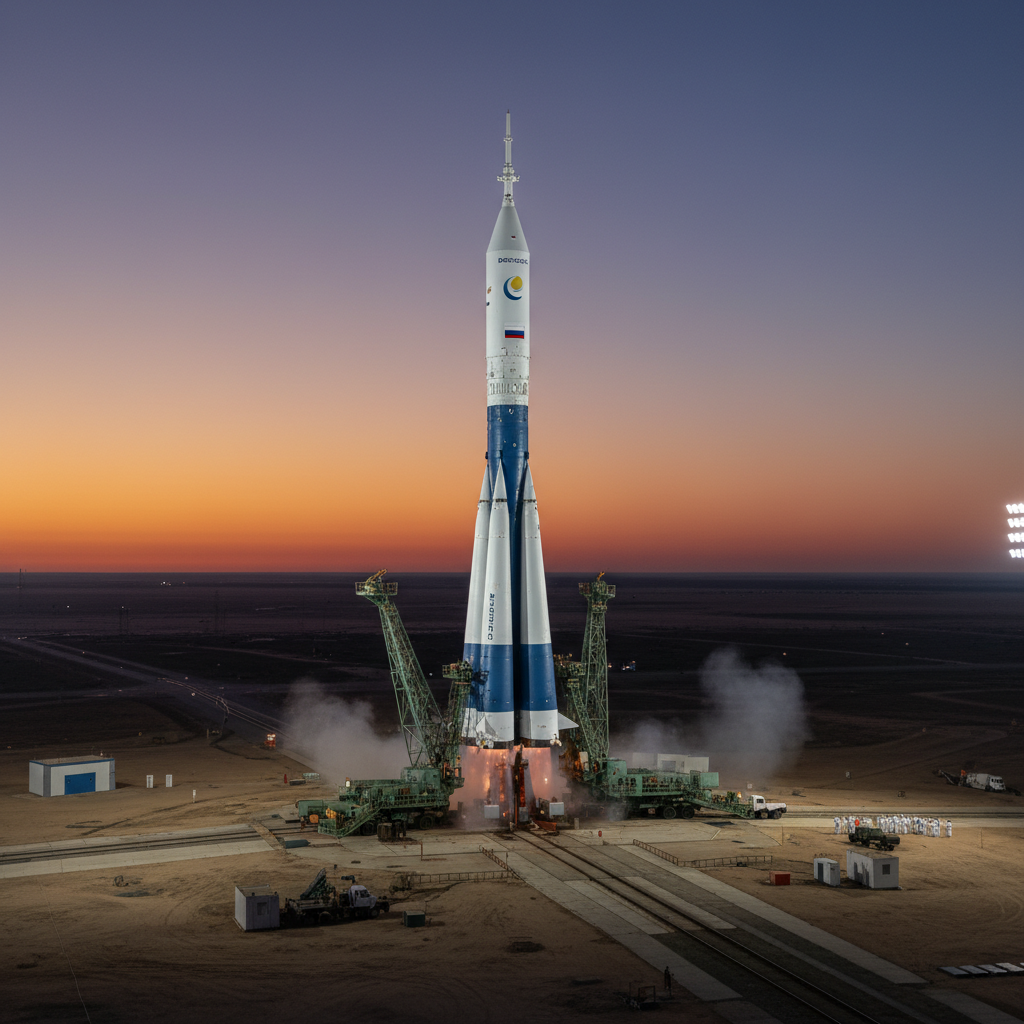
Russia is on track to fly the latest iteration of its Soyuz rocket, dubbed Soyuz-5, before the end of the year. That’s according to Dmitry Bakanov, the director general of Roscosmos, who recently spoke with the state-run news agency TASS.
“Yes, we are planning for December,” Bakanov told TASS. “Preparations for the first launch are almost completed.” The launch pad in question is Baikonur in Kazakhstan. If the launch goes as planned, it will be the maiden flight of a rocket that has been in the works for over ten years. Roscosmos is planning multiple test flights. The rocket is not expected to enter regular service before 2028.
The Soyuz-5 (also known as Irtysh) rocket isn’t a clean-sheet design. Most of its technology is recycled from the Zenit-2, an earlier rocket of similar design and origin. Zenit’s main configuration dates to the 1980s. A product of the Yuzhnoye Design Bureau in Ukraine, the rocket was manufactured in Ukraine and powered by Russia’s RD-171 engine. Zenit is therefore an example of post-Soviet cooperation between the countries in the aerospace industry. That cooperation, however, ended in the wake of Russia’s invasion of Ukraine in 2022. In late 2023, the Russian military even bombed the former Zenit assembly plant in Ukraine.
As a result, Soyuz-5 can be described as a larger version of Zenit that is manufactured entirely in Russia. It is, essentially, a redesign to remove all Ukrainian parts and replace them with domestically produced equivalents. That’s a strategic victory for Moscow, one that ends years of dependency on foreign components while also phasing out the elderly Proton-M launcher.
A Bridge Between Past and Future
From an engineering standpoint, Soyuz-5 is classified as a medium-lift rocket. The vehicle is capable of carrying about 17 metric tons to low-Earth orbit (LEO). That performance is due to slightly enlarged propellant tanks, among other factors. The most important component is the rocket’s core engine, known as the RD-171MV. This is the latest variant of a family of rocket engines with a long history.
The original RD-171 traces its design to the Energia rocket of the 1980s. Energia, in turn, powered the Soviet space shuttle Buran. The current RD-171MV is distinguished by one key fact: it is assembled without the help of Ukrainian components. Powered by kerosene and liquid oxygen, it generates more than three times the thrust of NASA’s Space Shuttle main engine. It is also the world’s most powerful liquid-fueled rocket engine in service.
That said, Soyuz-5 is an expendable rocket. In contrast, many of its competitors are purpose-built for reusability. SpaceX’s Falcon 9 is the most visible example of that trend, though other companies have also adopted the practice. That is why it’s hard to see how Soyuz-5 can capture a significant share of the international launch market. Barring a political decision to buy Russian rockets, the outlook for commercial business appears grim.
There are other reasons for Soyuz-5 to exist, however. Russia’s aerospace industry, hit by war costs and international sanctions, has seen a cut in funding. A purpose-built new reusable rocket is a hard sell. The Amur launcher, also known as Soyuz-7, was conceived for that role. Featuring a reusable first stage and methane-powered engines, it could one day compete with SpaceX for cost. But delays have pushed back its launch until at least 2030.
In this context, Soyuz-5 is a bridge to the future—a near-term interim solution that can keep Russia’s space program on track. If that is the only goal, then an early test flight is a success in itself. The fact that Roscosmos has managed to get Soyuz-5 to this stage in the first place, under duress, should be seen as an achievement. The demonstration of a successful launch in December, after all, would prove that Russia can still put new hardware on a launchpad despite the setbacks it’s facing.
Of course, the future is about more than Soyuz-5. The global launch market is changing by the year, with SpaceX and Chinese providers offering ever cheaper services. Russia still has the Soyuz-2 rocket, used for crewed missions, and the Angara family for heavier payloads. Neither has managed to carve a niche in the international market, and there is little reason to believe Soyuz-5 can succeed where its predecessors failed.
Nonetheless, Russia is still getting a rocket. And that, in itself, is significant. The challenge for Russia now will be to keep up the momentum in the years to come. What comes after Soyuz-5 is not yet clear. But whether the next step is called Amur, or something else from Roscosmos’ drawing board, one thing is certain: Soyuz-5 has a job to do for the near future.