- calendar_today August 7, 2025
Publishers Say US Lacks Infrastructure to Make Board Games Domestically
The board game industry, an inventive one with close-knit communities and small margins, has recently been dealt a financial gut punch that many fear will spell its doom. Design icon Jamey Stegmaier (Scythe, Wingspan) posted an emotional response this week to a surprise 54 percent tariff on imported goods from China.
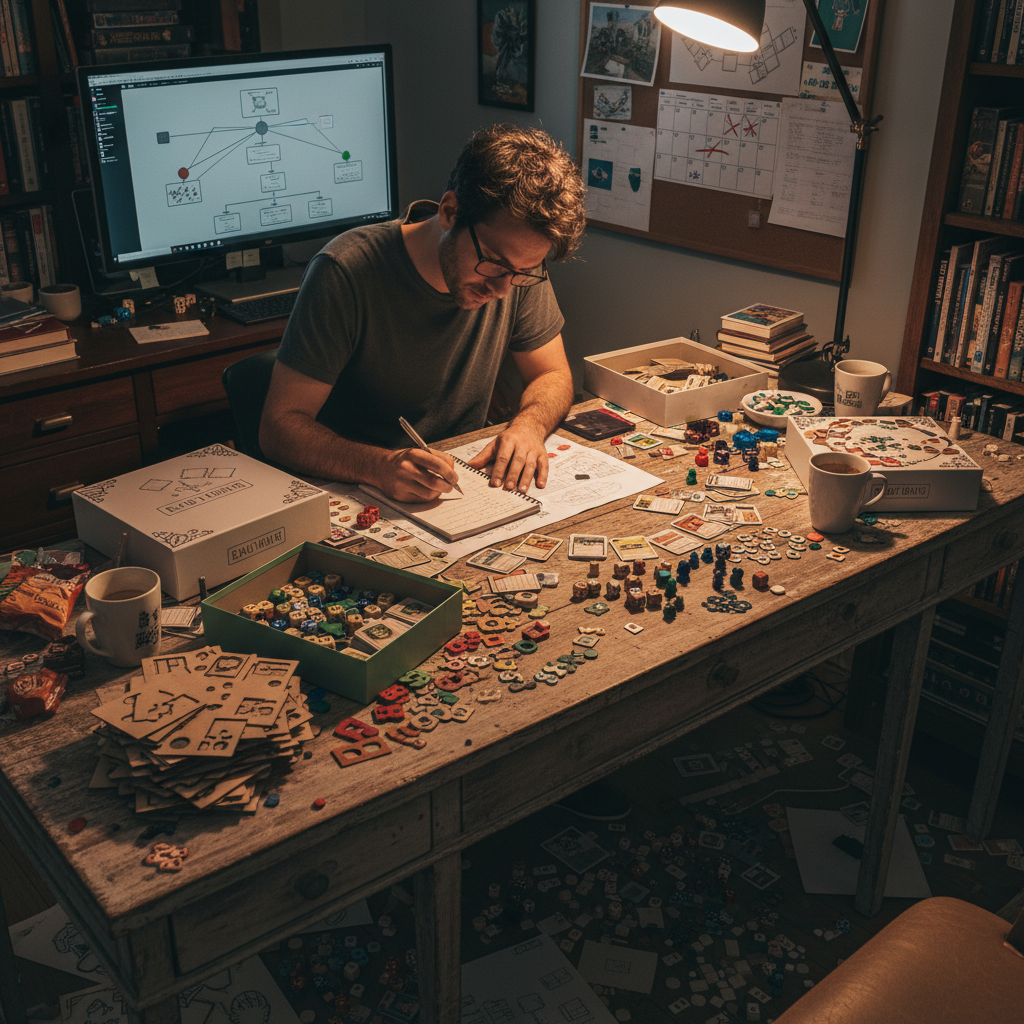
In his statement, posted to his blog, Stegmaier (owner of state-of-the-art board game company Stonemaier Games) wrote, “Last night I tried to work on a new game I’m brainstorming, but it’s tough to create something for the future when that future looks so grim. I mostly just found myself staring blankly at the enormity of the newly announced 54 percent tariff.”
For the designer of some of the world’s best-selling games, it was a deeply personal statement and one unusually vulnerable for an industry that’s often scrappy and proud of that fact. That’s because it isn’t just Jamey Stegmaier who relies on and works with this Chinese manufacturing infrastructure—it’s the majority of the American board game industry.
An International Model, Interrupted
It’s no secret that most of America’s board games are made in China. Yes, there are factories in other countries, including, of course, Germany, the spiritual homeland of modern tabletop gaming, but in the developed world, nobody does it quite like China can. Not just printed cards, but custom plastic miniatures, wooden tokens and markers, die-cut boards, and specialty dice.
Manufacturing those components locally is not, in practice, an option. Stegmaier recalled receiving a $10 quote from a US manufacturer for an empty, plain cardboard game box, no less. He had received that quote without custom tooling (the design elements carved into the cutting blades to punch out all those custom shapes), and for the price of the board itself, Stegmaier could import a finished, shrink-wrapped game from China and have the Chinese manufacturer pack it for shipping to US retailers.
That’s why this new tariff has industry insiders in such a state of distress. For the majority of US board game publishers, and especially small to mid-sized companies, profit margins on a new game are slim—sometimes so slim there’s hardly any buffer to pay for the increased cost with no advance notice.
The outcry wasn’t just from Jamey Stegmaier. Steve Jackson Games (owner Meredith Placko), makers of the Munchkin series, the Expert/Super expert set of Exploding Kittens, and many other games from Cerdè to Mars Rising, all manufactured in the same way as the majority of the industry does.
Placko wrote in her post, in response to people asking why they don’t just manufacture stateside, “I wish we could. But the infrastructure to support full-scale boardgame production—specialty dice making, die-cutting, custom plastic and wood components—doesn’t meaningfully exist here yet. I’ve gotten quotes. I’ve talked to factories. Even when the willingness is there, the equipment, labor, and timelines simply aren’t.”
Placko, like Jamey Stegmaier before her, didn’t just see this as a logistical problem; she saw this as an existential one. The new policy was “not just a policy change,” she wrote, “it’s a seismic shift that is going to affect [sic] every part of our industry.”
Rob Daviau, who recently co-founded Restoration Games with partner Carlos Rivadeneira, is another industry name who has been warning of just this. The long-time designer of Pandemic Legacy, Daviau, has been putting out statements on social media for months, claiming that nearly every business meeting with other industry members in recent times has become “an existential crisis about our industry.”
Interviewed by BoardGameWire, Daviau warned that “tariffs will cause a great collapse in the hobby gaming market in the US.” Many companies will go bankrupt, he said. “Prices will soar,” Daviau continued, “People will buy fewer products, distributors will go bankrupt, and Amazon and Alibaba will prosper. The future that everyone is asking me about is if we as an industry will have a future at all.”
Consumer Repercussions and Retailer Ripple Effects
The downstream effects will also likely impact end-consumers, of course. Gamers can probably expect to see higher prices on retail releases of new games. Some companies will try to cut corners to maintain existing price points, which will lead to lower production values. Some may simply decide to cut back on new game releases altogether.
There are also concerns about how local game stores, which already face tough competition from online sales, will fare. With gamers either turning to the games they already own on their “shelves of shame” (a term of endearment for tabletop players’ collections of games with beautifully designed boxes full of pieces, many unplayed) or simply buying online from wherever will get them the best deal, physical retailers may suffer as well.
“Within a few months, US companies will lose a lot of money and/or go out of business,” Stegmaier has said. “And US citizens will suffer from extreme inflation.”
Limited Solutions, Delayed Impacts
It should be said that this won’t stop US publishers from shipping through non-US distribution centers in the meantime—European game buyers are not going to face such crippling tariffs. This isn’t much of a workaround for domestic companies, as in the case of Stonemaier Games and most others, 65 percent of their sales revenue is from US-based sales.
The greatest frustration, as Stegmaier points out, is that, of course, it won’t impact games still in the design or early production stages. He and other companies will be able to reallocate budgets and try to factor in the cost increases. But for games that have already gone through production, that are currently in China waiting to be shipped to North America, there’s no avoiding the tariff. Chris Solis, head of California-based Solis Game Studio, summed it up well: “I have 8,000 games leaving a factory in China this week and now need to scramble to cover the import bill.”
Industry Advocacy Groups Respond
The Game Manufacturers Association (GAMA), the trade and lobbying group for the US board game publishing industry, is on record lobbying heavily against the tariff, to no effect as of this writing.
In Conclusion
There’s a sense of the industry in crisis right now. A global pandemic was rough, but at least companies could adapt and pivot, whether to new genres, temporary store closures, or pivots to direct online sales to consumers.
This, on the other hand, is a risk that was always looming. The industry has lived with the threat of import tariffs over the years, whether in negotiations or threatened tit-for-tat posturing between the US and China and other international markets. No one expected it to come to pass.
Now, it’s not only a possibility, but a full-blown, industry-wide existential crisis—and the board game industry is getting ready to find out just how resilient it can be.