- calendar_today August 22, 2025
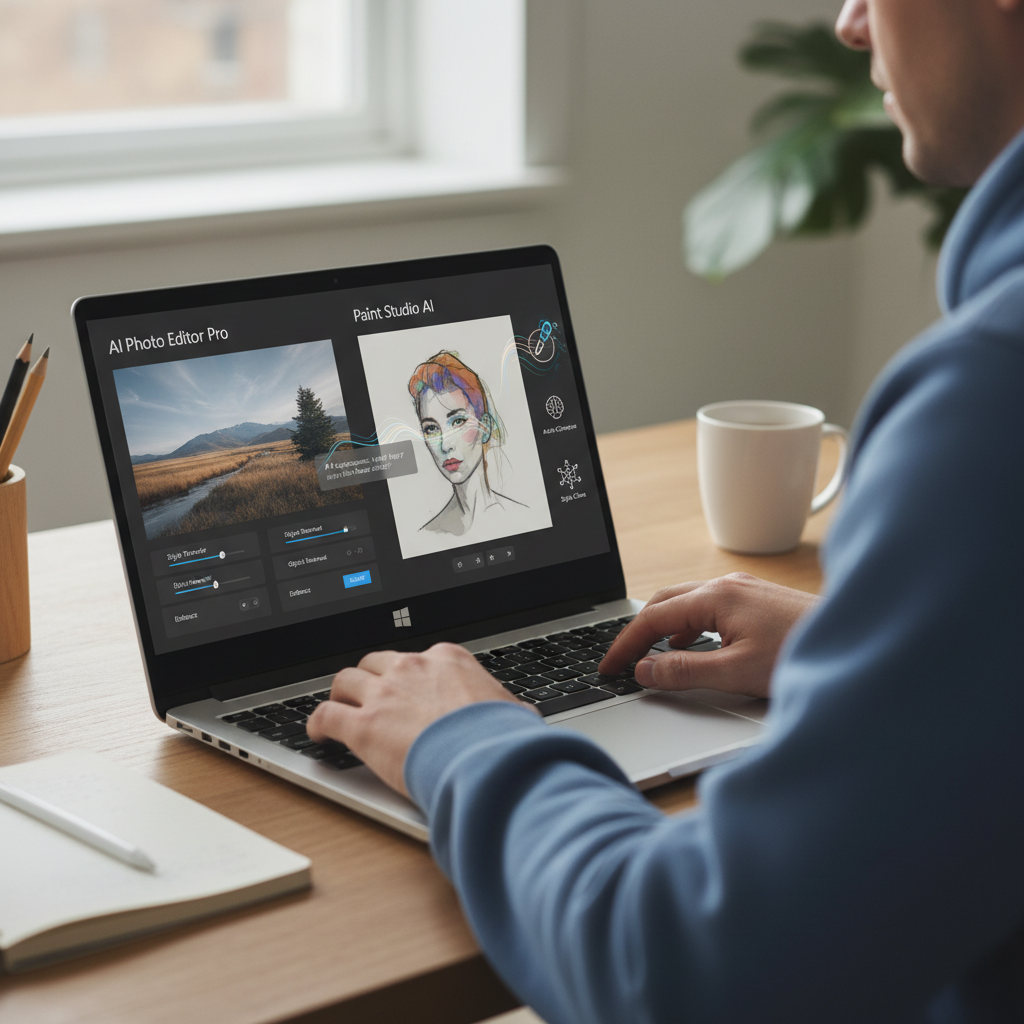
Microsoft is moving once again in the field of artificial intelligence, but this time it goes beyond mere flashy capabilities like Windows Copilot. According to a recent report, some of Windows 11’s most often used and familiar applications are directly including artificial intelligence built right into them. We are discussing paint, camera, photos, and snips tools. Though they have been a part of the Windows ecosystem for decades, these fundamental apps are about to be reinvented with artificial intelligence’s help.
Among the notable improvements under test are optical character recognition, or OCR, included in applications managing images and screenshots. OCR lets a gadget identify and extract text from images. Therefore, if you have ever taken a screenshot of a product label or captured a picture of a slide during a lecture, this new function will enable you to copy the text from that picture anywhere you require. There is no more hand typing of things. Not necessary for online converters or outside programs. Built in, flawless, and quite practical.
Thanks to the neural engine built into their A- and M-series CPUs, Apple users have had a similar experience in their Photos and Camera apps for a few years. Microsoft’s embrace of OCR into its main products demonstrates its preparedness to provide Windows users—especially those who depend on screenshots, scans, or images for business or study—the same degree of convenience.
Text recognition is not the only thing arriving, though. Additionally, under development by Microsoft are image intelligence tools that would let the Photos app identify and separate objects, people, or animals inside a picture. All without sophisticated editing knowledge, this allows you to remove backgrounds, highlight important areas of an image, or cut out just the object you wish to work with. Neither downloading a separate app nor joining Adobe Creative Cloud will be necessary. Everything is handled natively, right within Windows.
Paint is set for another change as well. For decades, the go-to for simple image editing and doodling is this one. It is now being considered as an AI art tool. According to Microsoft, Paint will have a generative artificial intelligence capability that lets users create images just by typing a description. The app will generate the picture for you, whether your idea is “a beach at sunset with flying cars” or “a fox reading a book in the snow.” Based on OpenAI’s DALL-E model, Bing Image Creator already employs this technology. Including it in Paint would make AI art more approachable than it has ever been.
These tools are especially potent since many of them will run on your device instead of the cloud. New hardware features—more especially, the inclusion of neural processing units, or NPUs, in next-generation CPUs—allow this. Originally including NPUs in its Snapdragon chips, Qualcomm is now seeing trends in AMD’s Ryzen 7040 series and Intel’s Meteor Lake CPUs. Faster results, less energy use, and improved privacy since your data won’t be sent to the cloud for processing—these chips are tuned for local AI workloads.
Windows 11 now boasts just a few NPU-powered capabilities, mostly for enhancing video calls. However, the new AI enhancements included in the main apps imply that Microsoft is getting ready for a time when NPUs will be expected, of course, in the Windows experience. That is a rather dramatic change. Your PC will be smart enough to do the heavy work right on its own hardware, not merely depend on cloud AI tools.
And that is what distinguishes Microsoft’s strategy. The company is enhancing the tools people already know instead of launching a lot of distinct artificial intelligence apps or pushing consumers to change their behavior. It’s about using your present resources to work smarter. Microsoft is delivering intelligent capabilities in a way that feels natural, intuitive, and really useful by including artificial intelligence into the central apps of Windows 11. It’s not about rewriting the wheel. It’s about perhaps smoothing it out a little.