- calendar_today August 9, 2025
As the U.S.–China trade war escalates in 2025, Florida’s investors are navigating a complex and fast-changing economic environment. The reintroduction of broad tariffs, coupled with China’s retaliatory trade measures, has reignited fears of prolonged market instability—particularly for a state like Florida, whose economy relies heavily on global trade, agriculture, and technology.
With former President Trump returning to office and pursuing a hardline stance against Chinese trade practices, investors and industry leaders across Florida are bracing for ripple effects that could challenge portfolios and shift economic priorities.
Key Trade Developments in 2025
In April, the White House announced sweeping new tariffs on Chinese goods, with levies reaching 54% across various sectors including automotive parts, consumer electronics, and semiconductors. The administration emphasized the need to close trade deficits, protect U.S. jobs, and reduce reliance on Chinese manufacturing.
China responded swiftly. Beginning April 10:
- 34% Tariffs on U.S. Exports: All American goods shipped to China are now subject to steep tariffs. This move significantly impacts Florida’s agricultural exports, including citrus, beef, and seafood, which represent major components of the state’s foreign trade.
(Source: Reuters) - Rare Earth Export Restrictions: China, which dominates the rare earth mineral supply chain, has imposed new export limitations. This is particularly concerning for Florida-based tech and aerospace firms that depend on these materials for production.
(Source: The Times of India) - WTO Filing: China has officially challenged the legality of the new U.S. tariffs at the World Trade Organization, a move that could drag the dispute into a prolonged legal standoff.
(Source: Deccan Herald)
Economic Impact on Florida’s Markets
The broader financial markets have already started to reflect the strain. The S&P 500 and Nasdaq each recorded their sharpest multi-day losses since the onset of the COVID-19 pandemic, with sectors tied to exports and tech hit hardest.
Agriculture and Export-Driven Industries
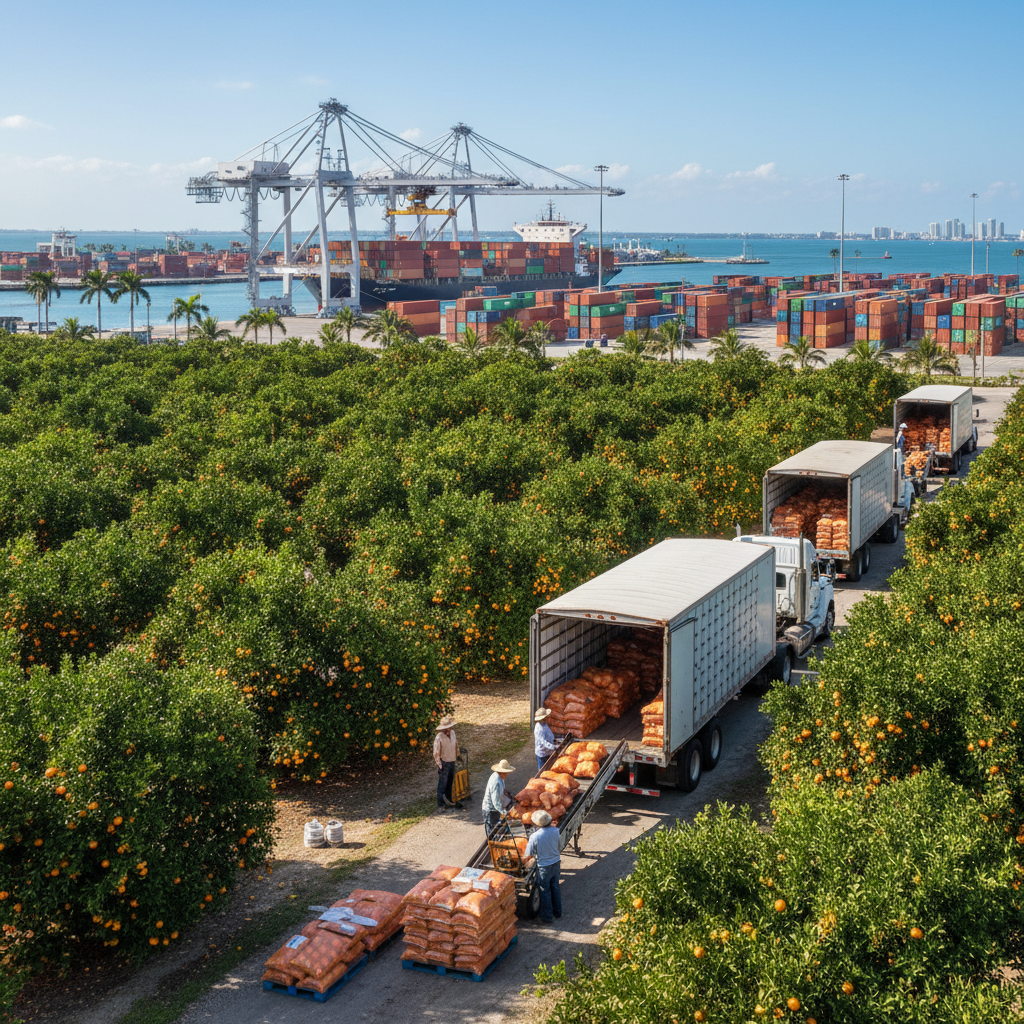
Florida’s citrus growers and beef producers are among the immediate losers in this renewed trade conflict. With China shifting its purchases to South American nations like Brazil and Argentina, Florida’s farmers face rising uncertainty and shrinking demand.
According to data from the first two months of 2025, exports of key Florida agricultural products to China have dropped by over 60% year-over-year. The state’s seafood sector, including shrimp and grouper exports, has also reported sharp declines in overseas orders.
Technology and Aerospace
Florida’s growing role in the tech and aerospace industries—especially in areas like Space Coast—means local firms are feeling the pressure of limited access to rare earth elements. Companies involved in satellite manufacturing, defense contracts, and electric vehicle components are now exploring alternative sourcing options, but at higher costs and longer lead times.
Tourism and Retail
While not directly tied to trade, Florida’s tourism and retail sectors are indirectly affected by economic uncertainty. With market volatility and higher inflation, consumer confidence could dip, leading to softer demand in areas like hospitality, real estate, and luxury retail—industries that form the backbone of the state’s service economy.
Smart Moves for Florida-Based Investors
Despite heightened market volatility, financial advisors are encouraging Florida investors to approach the situation with strategic foresight:
- Favor Domestic-Driven Sectors
Companies focused on U.S. infrastructure, logistics, and manufacturing are likely to benefit from federal incentives and reduced exposure to foreign policy risk. - Diversify Beyond China-Exposed Holdings
Investors should review their portfolios for overexposure to companies with significant China dependencies—whether through supply chains or customer bases. - Explore Inflation-Hedged Assets
Real estate investment trusts (REITs), Treasury Inflation-Protected Securities (TIPS), and commodities could offer more stability amid trade-induced inflation pressures. - Stay Informed and Flexible
Economic conditions are evolving rapidly. Regularly monitoring trade talks, company earnings, and government policies will help investors adapt in real time.
Risks and Opportunities
Florida’s economy is resilient, but not immune to global headwinds. As the U.S.–China trade dispute continues to evolve, investors must weigh geopolitical risk alongside traditional financial metrics. The situation presents both danger and opportunity—depending on how individuals and institutions choose to react.
By remaining vigilant and diversifying wisely, Florida’s investors can weather this storm and position themselves for long-term growth—even in a more divided global trade landscape.