- calendar_today September 1, 2025
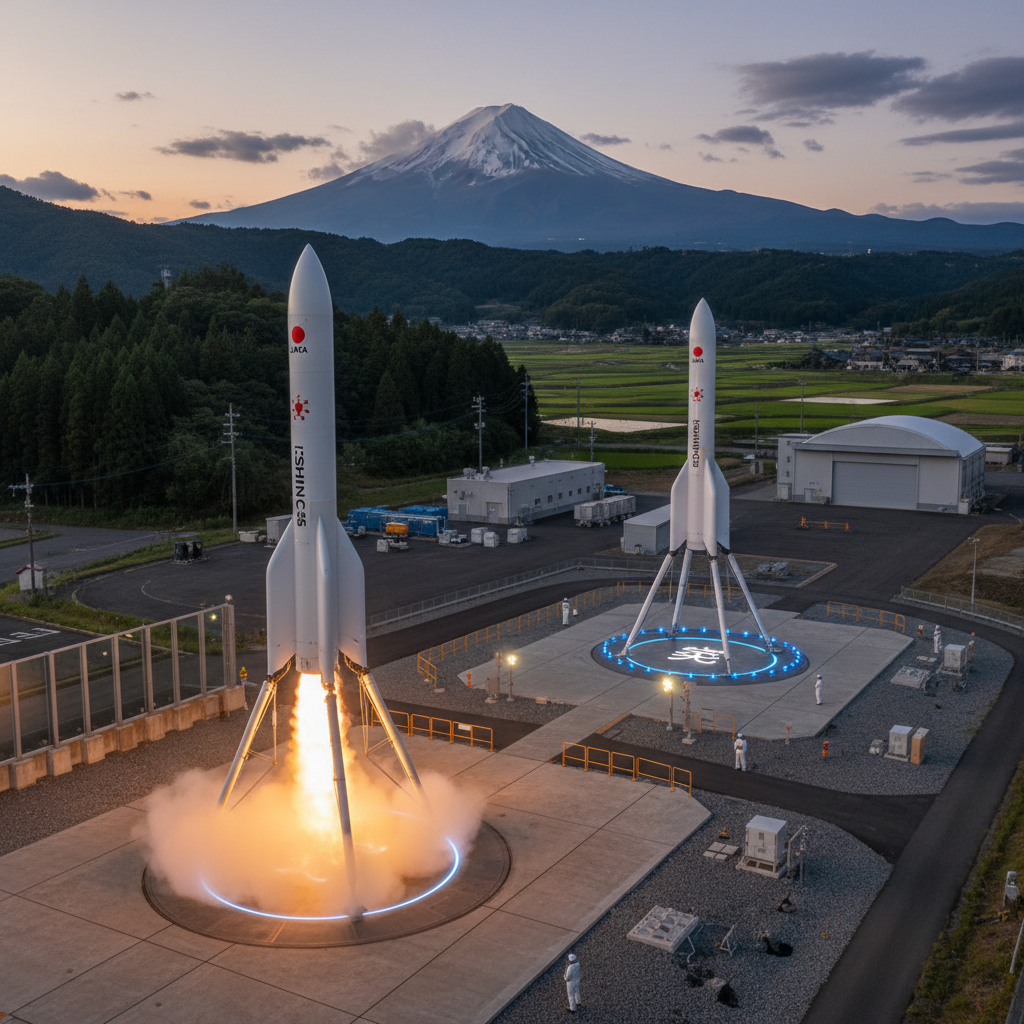
Honda, the company that brought you those rad-ass motorbikes and those funky little cars you see all over your local streets, is moving beyond the limits of our planet’s surface. This week, the Japanese auto giant announced that it successfully conducted a rocket launch and landing test using a craft developed by its own research and development arm. It’s the company’s first attempt to successfully launch a rocket and then bring it back to Earth safely.
And this isn’t some obscure test happening at a remote international launch pad. This was done at the company’s own facility in Taiki Town, Japan, a region quickly turning into a growing hub for space innovation. The rocket rose to a height of 890 feet before descending back to Earth and landing 37 centimeters away from its target. It’s a major success for the company — that’s a launch and landing, no less.
You wouldn’t expect this from a company whose main business is in shipping around the planet, after all. But that’s why this launch is so exciting. It proves that Honda is building real hardware for actual spaceflight, not just testing concepts.
From Cars to Spacecraft
Honda isn’t leaping into space on a whim. The company announced its intention to get into the space business back in late 2021, but hasn’t said much about its work since. This first test gives us a glimpse at what’s been happening behind the scenes. Instead of building an entire system from scratch, the company is using technologies already developed for other projects, including automated driving. The precise guidance systems that make those cars drive themselves are now helping manage its rocket’s vertical takeoff, stability, and landings.
It’s an interesting application of those technologies. And it seems to be working.
That rocket wasn’t a one-off test. This marks the first time the company is sharing its true space journey, one it plans to start as early as 2029. That’s when the company aims to send a rocket beyond 62 miles (100 kilometers) above sea level. That threshold is generally recognized as the limit of Earth’s atmosphere, but it’s still a significant milestone to overcome. Launching that high requires more than a rocket — it requires specific engines, stabilization technology, and recovery systems.
For that next step, though, Honda hasn’t committed to a commercial business model yet. The company hasn’t indicated that it’s planning to turn its rocket business into a commercial endeavor, but this test puts it on a trajectory that may make that decision sooner than later.
But this launch isn’t just happening in any old place. Honda isn’t launching out of a foreign land but in Taiki Town, Japan, an area working to become a new hub for aerospace. The region, in Hokkaido, has signed deals with other companies and national agencies like JAXA to build testing infrastructure, support facilities, and even training programs.
With Honda joining a growing roster of companies actually conducting real tests in the region, Taiki Town is quickly becoming one of Japan’s most important aerospace centers.
That launch wasn’t just a once-and-done test. Honda is stepping into a space that’s dominated by massive companies like SpaceX and Blue Origin, firms with the money and years of experience in orbital flight. But what Honda brings is different: years of experience in manufacturing efficiency, robotics, and mobility technology that could give it a unique advantage as it progresses.
This test wasn’t just a one-off. It was a signal that Honda is gearing up for a journey far beyond Earth.