- calendar_today September 2, 2025
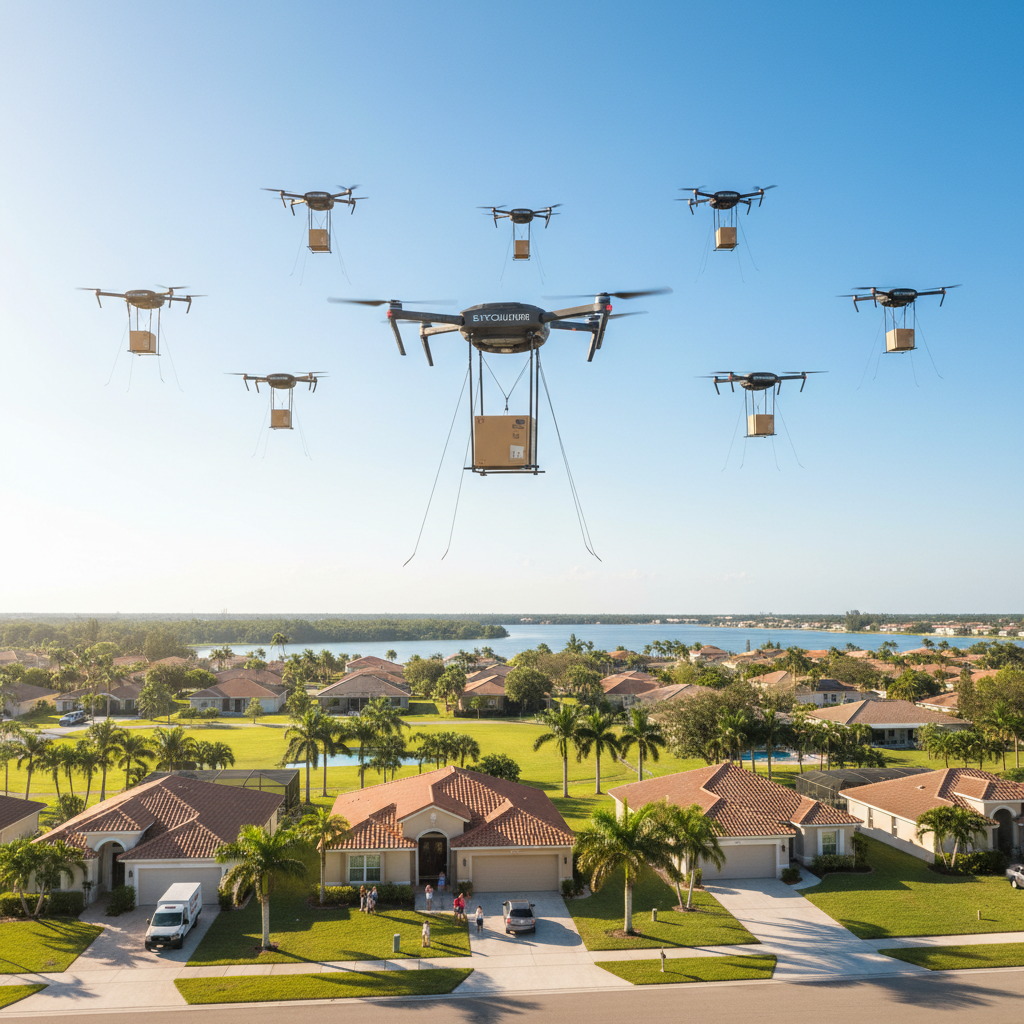
Florida, with its sunshine and wide cities, is now witnessing a new type of activity in the air. Amazon’s drone delivery initiative, which began as a high-tech experiment, is now taking to the skies in different regions of the state. The mission? To revolutionize the way things are delivered and make logistics like never before. As these tiny flying machines start humming overhead, the whole logistics scenario in Florida is beginning to change.
From Miami’s urban neighborhoods to quieter coastal towns, Amazon’s drones are redefining expectations for speed, convenience, and efficiency. For Florida’s logistics industry, this marks the beginning of a new chapter—one where traditional shipping methods are being challenged and reshaped by automation and aerial innovation.
A Shift in Delivery Speed and Strategy
Perhaps the most evident change Amazon’s drone delivery service is introducing is speed. The offer of receiving packages within 30 minutes isn’t hype—it’s rapidly becoming a reality. These drones are capable of delivering small, light packages straight to customers’ doorsteps, dodging traffic and conventional infrastructure.
For Florida, with its tourism and seasonal traffic, which can bottleneck roads and create congestion, this is a significant plus. The logistics industry is now feeling the pressure to keep up with the same rhythm. Warehouses and last-mile delivery companies are reconsidering how they do business in an era where customers expect near-immediate satisfaction.
Old-school carriers can’t soar above rush-hour traffic, but they’re starting to embrace faster, technology-based systems in reaction to Amazon’s aggressive move. That includes faster route determination, improved tracking technology, and more intelligent inventory control—all pieces of a dynamic logistics system prompted by drone delivery.
New Opportunities for Urban and Rural Florida
Florida’s peculiar combination of urban life and countryside stretches means that it is an ideal proving ground for drone delivery. In urban centers such as Orlando or Tampa, drones reduce traffic through congested neighborhoods where delivery by road could be slower at peak times. But it is rural areas where the effect could be even greater.
Plenty of smaller towns throughout Florida have had to cope with slower delivery speeds and more restricted shipping choices for decades. Amazon’s drones are closing that gap. With air delivery, distance is less significant. Packages may be flown straight to outlying homes or farms without depending on large highways or conventional delivery trucks.
This does not only enhance customer satisfaction but also provides small firms in the areas with improved access to tools, products, and materials. Quick delivery equates to less delay, greater productivity, and possibly reduced costs.
Helping Florida’s Thriving E-Commerce Industry
Florida has experienced explosive growth in online shopping, particularly from local merchants and new businesses. With more individuals making purchases online, there has been a huge demand for quick, effective delivery mechanisms. Amazon’s drone initiative comes at the perfect time, offering new means of delivering products to consumers quickly and dependably.
Local online businesses are starting to consider how they can integrate faster delivery promises into their sales models. Whether it’s a handmade soap company in Sarasota or a boutique tech shop in Fort Lauderdale, being able to say “same-day delivery” is now more attainable.
This forces logistics companies in Florida to spend money on improved infrastructure and seek out collaborations that would potentially involve drone assistance in the future. The spillover effect does not stop at Amazon—it spurs innovation throughout.
Cutting Down Environmental and Operating Expenses
Florida’s logistics industry has also been searching for ways to minimize its impact on the environment. With increasing fears about climate change, more businesses are turning towards green alternatives to conventional delivery. Amazon’s drones represent a small but significant step in this process.
Drones are cleaner than gas-powered delivery trucks. They fly by electricity and take the most direct routes, wasting less energy in traffic or making long detours. The more drones that fly, the better the overall environmental performance of Florida’s logistics network could become.
On the commercial side, drones can also help cut costs of operations. With fewer delivery cars, there would be less expenditure on fuel, maintenance, and labor. In the long run, this would result in cheaper shipping charges for businesses and consumers.
Challenges Ahead and How Florida Can Adapt
While Amazon’s drone delivery initiative is full of potential, it’s not without challenges. Florida weather, for example, can be volatile. Heavy rain, hurricane conditions, and high winds could keep drones grounded for weeks on end. The program will have to design weather-resistant systems and emergency redundancies to maintain consistent service levels throughout the year.
There are also issues regarding regulations. Airspace management, privacy, and public safety are all in play as drones become more prevalent. But Florida is used to being at the forefront of innovation. With proper planning and assistance, the state is well-positioned to be the leader in accommodating these changes.
Local governments, technology companies, and transportation companies have the opportunity to collaborate to ensure drone delivery develops responsibly and effectively in Florida.
Final Thoughts
Amazon’s drone delivery initiative is not merely a technology trend—it’s fast becoming an actual aspect of Florida’s logistics future. With quicker deliveries, increased rural reach, and greener operations, drones are reshaping the way products travel around the state.
For Florida’s economy, the message is unmistakable: Logistics’ future is now, and its in the skies. Embracing that change early on can provide companies with a competitive advantage and a way to address the increasing needs of a rapidly changing market. As a retailer, logistics company, or tech startup, it’s time to look up because Florida’s next logistics revolution is already flying high.