- calendar_today August 20, 2025
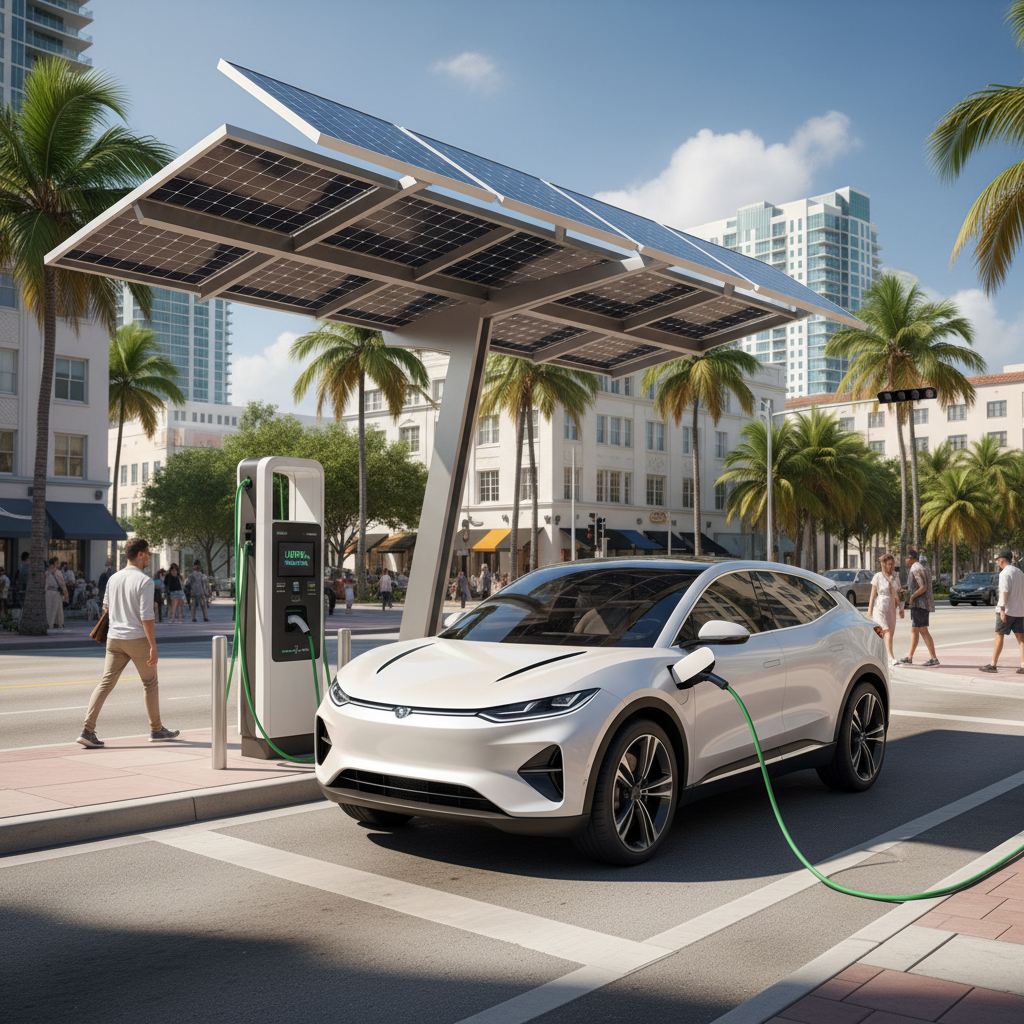
Florida—a state facing the realities of climate change and investing heavily in clean transportation—is at a unique crossroads when it comes to electric vehicle (EV) adoption. With its sprawling urban markets, aggressive EV infrastructure buildout, and coastal vulnerability driving sustainability initiatives, Florida has become a critical testing ground for the future of mobility.
As Floridian investors—from Miami to Orlando to Tampa—explore their next long-term opportunities, Fisker Inc. enters the conversation. Once lauded for its eco-conscious design and technology vision, Fisker now faces mounting challenges in delivering on its promises. Yet its alignment with Florida’s clean energy priorities makes it a stock to watch heading toward 2030.
A 2025 Crossroads for Fisker
Fisker (NYSE: FSR) began 2025 amid uncertainty. Its Ocean SUV received early industry acclaim for style and sustainability, but recurring production setbacks, delivery delays, and global supply chain disruptions have shaken investor confidence. By mid-2025, Fisker’s market cap had dropped below $1.3 billion, far removed from its 2021 peak.
Still, Florida-based investors see dual forces at play. On one hand, the Sunshine State is accelerating EV adoption faster than many others, ranking among the top five states for new EV registrations. On the other hand, Fisker’s lack of manufacturing presence in North America limits its ability to fully capitalize on regional policy incentives. This creates a mixed outlook that Floridian investors must weigh carefully.
Forecasting Fisker’s 2030 Price Path
Fisker’s path to 2030 is shaped by speculative yet plausible outcomes:
Bull Case: If Fisker hits its production and delivery goals, the introduction of its affordable Pear and lifestyle-focused Alaska models could help the company surpass 200,000 vehicle sales annually. This could generate $6–$8 billion in revenue and push the stock price to $25–$30. For Florida investors seeking growth in climate-aligned equities, this scenario is compelling, especially in metros like Miami and St. Petersburg, where ESG investing trends are accelerating.
Base Case: A more conservative forecast projects 75,000 to 100,000 units sold per year, resulting in $3–$4 billion in revenue. This would place Fisker’s stock between $8 and $12, which could appeal to Florida’s middle-class investor base seeking exposure to green tech without taking on excessive risk.
Bear Case: Ongoing setbacks could limit Fisker’s ability to scale, leaving annual sales below 50,000 and pushing revenue below $2 billion. In this case, shares might hover between $3 and $5, making them unappealing for risk-averse Florida retirees or fixed-income investors who dominate financial hubs like The Villages and Naples.
Industry Context: EV Growth, Tax Incentives, and Market Pressure
Florida is ramping up EV infrastructure with help from federal funds, aiming to install thousands of charging stations statewide. Cities like Orlando and Tampa are already building out municipal EV fleets, and the state has committed to increasing public-private investment in clean transportation.
However, Fisker’s current reliance on Austria’s Magna Steyr for vehicle assembly disqualifies it from full Inflation Reduction Act tax credit benefits, which are increasingly influential in consumer decision-making. Competing EV makers like Tesla and Ford—both with stronger U.S. production networks—enjoy an edge in Florida’s incentive-driven landscape.
To compete, Fisker may need to explore U.S.-based manufacturing partnerships or regional distribution hubs. Without these, its value proposition in Florida may be more aspirational than actionable.
Investor Sentiment and Florida’s Financial Dynamics
Florida hosts a diverse investor base. While major financial centers like Miami attract speculative tech capital and ESG venture funding, the state is also home to large numbers of retirees and fixed-income investors who prize consistency and dividends over long-term speculation.
Institutional sentiment toward Fisker has cooled significantly in 2025, especially after missed milestones and financial warnings. Yet retail enthusiasm remains in pockets, especially among younger investors in cities like Jacksonville and Tallahassee who are increasingly prioritizing environmental impact in their portfolios.
Fisker’s ability to regain trust in Florida will hinge on its fourth-quarter 2025 performance and how smoothly it launches the Pear model in 2026.
Looking Ahead: The Road to 2030
Florida is not just adopting EVs—it’s investing in a climate-resilient future. With frequent flooding, rising sea levels, and extreme weather, the state hasan urgent motivation to decarbonize its transportation system and reduce emissions. This broader shift makes EV-related equities attractive to local investors with a long-term view.
Fisker’s presence in this conversation is tenuous but possible. To capitalize on Florida’s green transition, the company must prove its operational capabilities, establish a clearer domestic footprint, and align with consumer preferences shaped by both environmental urgency and practical cost incentives.
For Florida investors, Fisker represents a speculative play with high upside but considerable downside risk. The next five years will determine whether the company can shift from a cautionary tale to a comeback story in a state that is quickly becoming a bellwether for clean transportation in the U.S.