- calendar_today August 17, 2025
Donald Trump likes to get bored. Once, he gave a speech about building a border wall in 2017, during which he spent 15 minutes talking about wind turbines. On Wednesday, as Trump was supposed to be taking questions from reporters about the European Union trade deal that he and the US had just agreed to, he went off on a wind turbine tangent.
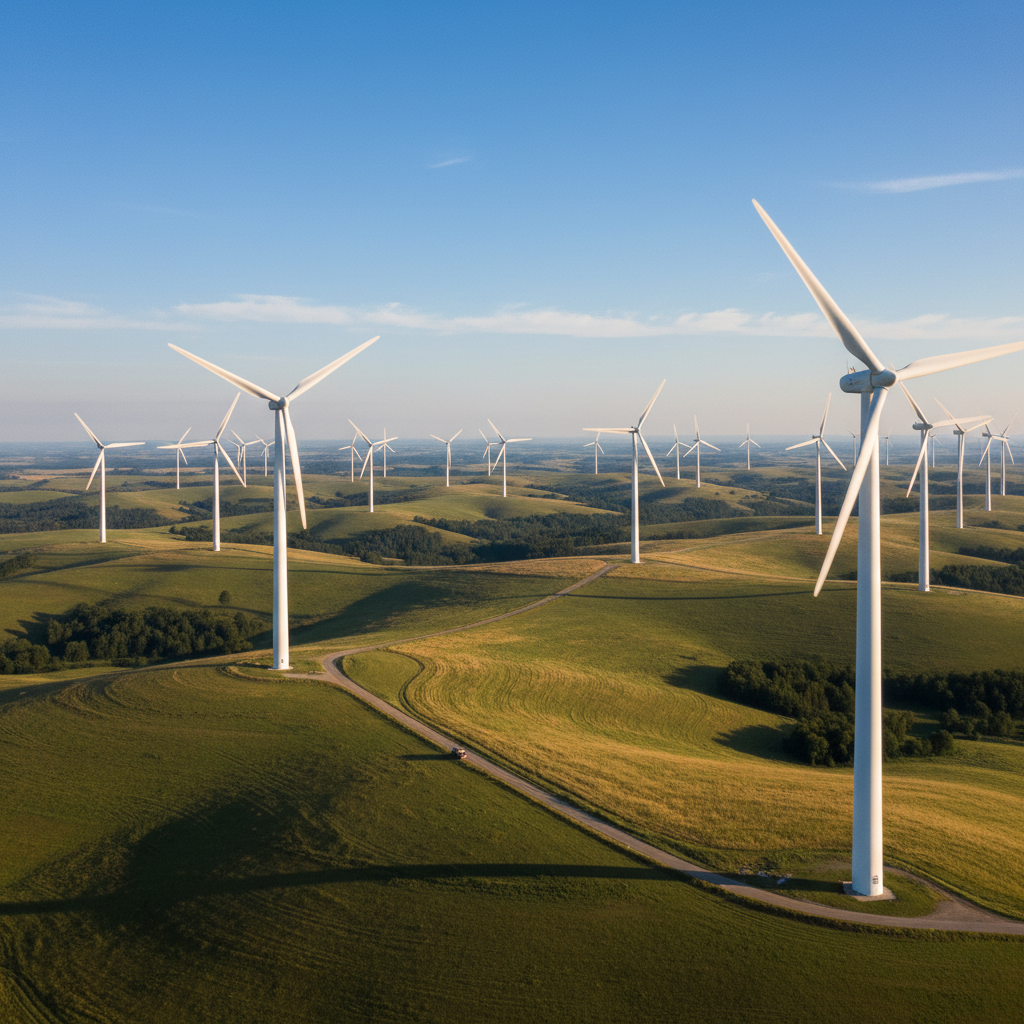
Trump called them “windmills” and a “con job,” saying they make whales “loco,” kill birds, and cause health problems. It’s the type of meme-y rant that you might expect from a world leader during a pandemic. But while this was another “dog whistle” from Trump, it’s also part of a longstanding international trend of conspiracy theories surrounding renewable energy technology, especially wind farms.
Trump’s rallying cry against “windmills” draws on past debates and a human tendency to mythologize new technology. In the 1800s, people were convinced that telephones were causing the spread of syphilis and gonorrhea, for instance. Experts now understand both to be examples of moral panic around the introduction of new technology that forces change in the way we live and work.
New research indicates that concerns such as these are much more deeply ingrained, and much harder to change. As has been demonstrated over and over, once a misconception is part of someone’s worldview, presenting them with facts is unlikely to change their mind.
That’s a major headache for governments, businesses, and institutions that need to rapidly scale up clean energy adoption in the coming decades.
A brief history of anti-wind conspiracies
Climate science has been raising alarms about the potential for global carbon dioxide emissions to cause catastrophic and relatively immediate change since at least the 1950s. But early calls for renewable energy technology adoption were often as much about challenging the control of fossil fuel energy companies as they were about carbon emissions.
Arguably the most famous cultural reference to this struggle is a story from The Simpsons, in which the capitalist villain Mr. Burns builds a tower to block out the sun and force the residents of the cartoon town of Springfield to buy nuclear power from him. The Simpsons gag was clearly an exaggeration, but it references a widely-held belief of the time that fossil fuel interests would actively work to stop the adoption of renewables.
In fact, fossil fuel companies and other supporters of the status quo have fought efforts to cut carbon emissions for decades. In 2004, then–Australian prime minister John Howard held a meeting of fossil fuel executives, bringing them together under the banner of the Low Emissions Technology Advisory Group.
The ostensible aim of the group was to support the government in finding “new and innovative solutions” for emissions reductions. In practice, its mission was to find ways of slowing the growth of renewables to protect the dominance of coal, oil, and gas.
Wind farms have also been held up by critics and conspiracy theorists. One persistent conspiracy theory, labeled by medical experts as a “non-disease,” held that wind turbines caused a range of non-specific health conditions, including headache, nausea, and “wind turbine syndrome.”
Wind farms are much more visible than coal mines or oil fields or nuclear plants, often located on ridgelines or open plains for maximum access to wind. They are also much bigger, covering hundreds or thousands of acres. As a result, they became a visible focal point for conspiracy theorists.
Academic studies bear out anecdotal evidence of this phenomenon, showing that demographics tell a much smaller part of the story of opposition to wind farms than ideas do. In one widely-cited study, researchers led by Kevin Winter studied over 2,300 people in Germany who had been asked about their opinions on wind farms in a national survey.
What they found was that conspiracy thinking was much more strongly associated with support or opposition to wind farms than any demographic markers, including age, gender, level of education, or political identification. A more recent study surveying people in the U.S., U.K., and Australia reported similar findings, finding that those who were “likely to endorse conspiracy thinking, regardless of the topic” were more likely to believe that wind turbines were harmful.
Wind farms have become a lightning rod. For supporters, they are progress, investment, innovation, and climate action. For opponents, they are government overreach, loss of control, surveillance, and a world turned upside down.
Wind turbines became a useful political symbol for Trump in part because he was the world leader most outspoken against the Paris Agreement, the international effort to cut carbon emissions.
The problem with wind farms, for some, is not what they are but what they represent
The energy systems that fossil fuels supported powered an entire century of prosperity and growth. Acknowledging that fossil fuels have negative effects feels to some like admitting that past prosperity was an illusion or mistake. Climate change denial, including denying the benefits of wind turbines, is one way to avoid that reckoning.
Scholars call this unwillingness to reflect on or acknowledge past missteps or mistakes “anti-reflexivity.” The anti-wind turbine arguments trotted out by Trump in his press conference and in his years in office are an example of that anti-reflexivity in action. Trump is nostalgic for the age of coal, oil, and gas, and laments what he views as the decline of American industry.