- calendar_today August 13, 2025
In 2025, Florida’s commercial real estate (CRE) market continues to command national attention, driven by sustained population growth, investor interest, and a diversifying economy. Yet the sector is also contending with rising climate risks, insurance volatility, and affordability pressures that vary significantly by region.
From booming industrial parks in Central Florida to evolving office trends in Miami and development slowdowns in coastal areas facing storm-related risk, Florida’s CRE narrative is both complex and regional. Here’s how the state’s property landscape is unfolding this year across key sectors.
1. Multifamily Sector Thrives, but Affordability Remains a Barrier
Florida’s population growth—especially in areas like Orlando, Tampa, and Jacksonville—continues to drive high demand for multifamily housing. According to Yardi Matrix, Florida cities ranked among the top nationwide for rent growth in early 2025, with Orlando seeing a year-over-year increase of 4.2% and Tampa rising 3.8%.
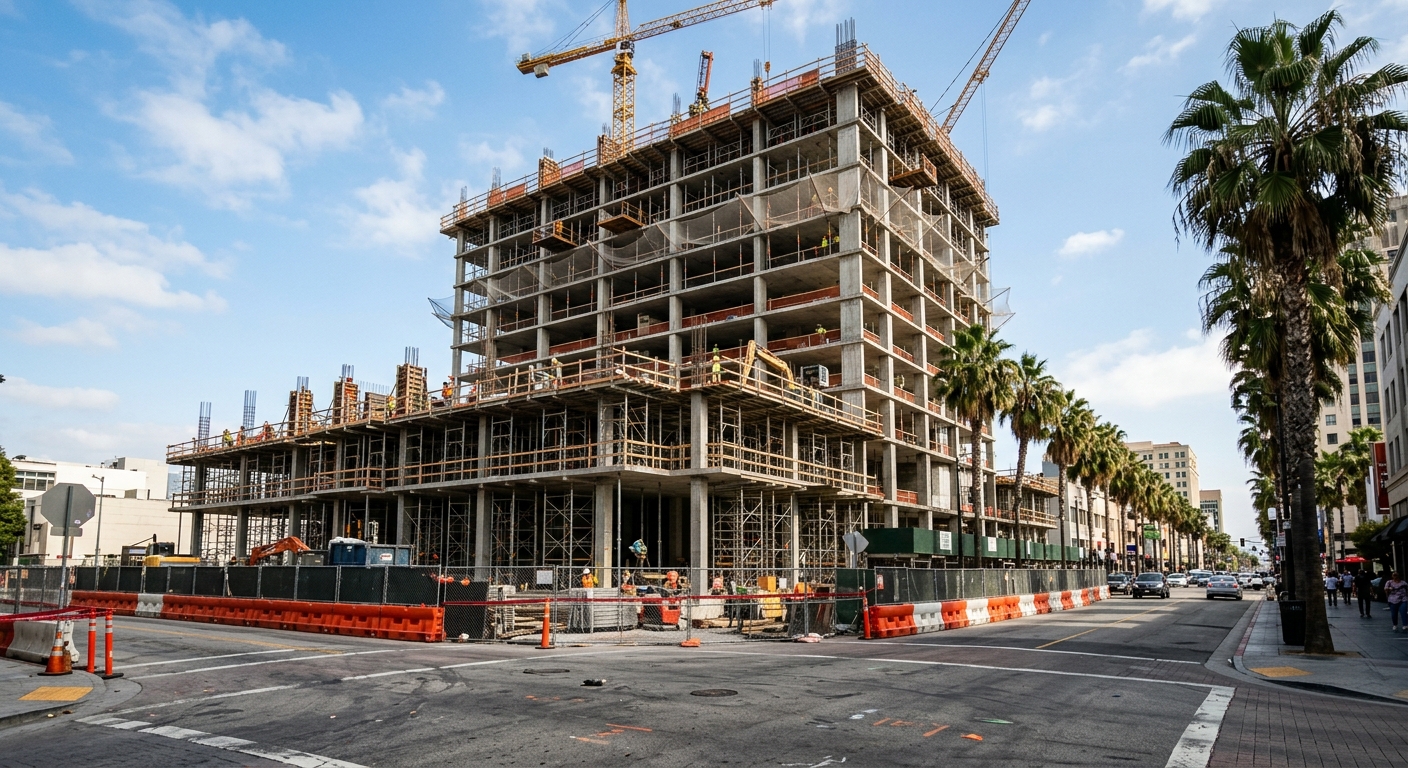
Developers are racing to meet demand, particularly in suburban areas where land is more available. However, rising construction costs and tightened financing are slowing new starts. The Florida Apartment Association notes a 12% decline in new multifamily permits compared to 2024, particularly in South Florida, where high land and insurance costs are limiting development feasibility.
Luxury apartments continue to outperform in markets like Brickell and Fort Lauderdale, but workforce housing remains underbuilt, leading to persistent affordability issues for middle-income renters across the state.
2. Industrial Real Estate Sees Strong Growth, Especially Inland
Florida’s industrial sector remains one of the most stable performers in 2025. Demand is strongest in Central and North Florida, where distribution hubs in Lakeland, Ocala, and Jacksonville are booming due to proximity to ports, highways, and growing populations.
E-commerce, food logistics, and third-party warehousing are key drivers. Amazon, Walmart, and Publix continue to expand their footprints, contributing to sub-5% vacancy rates in core industrial corridors, according to Colliers Florida’s latest market snapshot.
South Florida’s industrial sector remains tight, but supply constraints are limiting growth. Inland migration of industrial tenants—away from the high insurance zones near coastal Miami—is now reshaping the state’s warehouse geography. Developers are pivoting toward inland counties like Polk, Lake, and Marion for build-to-suit projects.
3. Office Sector Faces a Divergence in Demand
Florida’s office market in 2025 is marked by bifurcation. In Miami and Tampa, Class A office buildings with premium amenities and flexible layouts are still leasing well, while Class B and C properties are struggling with rising vacancies.
Hybrid work remains common, especially among financial services and legal firms. Companies are downsizing footprints or subleasing space. Miami’s overall office vacancy climbed to 18.5% in Q2 2025, up from 15.7% a year ago, while Fort Lauderdale and West Palm Beach show similar trends.
In contrast, cities like Jacksonville and Orlando are seeing more stable demand for suburban office parks, especially those near residential growth hubs. Submarkets like Lake Mary (Orlando) and Southside (Jacksonville) are attracting healthcare, insurance, and tech tenants seeking more accessible, parking-friendly environments.
4. Retail Recovery Favors Experiential and Lifestyle Centers
Retail real estate in Florida is undergoing a quiet reinvention. Neighborhood centers anchored by grocers like Publix and Aldi are thriving, particularly in fast-growing suburbs. High foot traffic and stable leases make these assets popular with investors.
At the same time, experiential retail is proving resilient in tourism-heavy markets. Malls in Orlando, Miami, and Tampa are transforming into mixed-use entertainment districts. Simon’s Dadeland Mall in Miami, for example, now includes co-working space, medical clinics, and boutique hotels alongside traditional retail.
However, older strip malls and underutilized urban retail corridors are lagging. Rising insurance costs and operating expenses have made it harder for small retailers to survive, particularly in coastal cities hit hard by recent hurricanes.
5. Climate Risk and Insurance Reshape Investment Strategy
Perhaps the most defining factor in Florida’s 2025 CRE market is climate resilience—or the lack thereof. Property insurance premiums have increased more than 40% in some counties since 2023, making underwriting a growing challenge.
Developers are shifting focus inland and northward, avoiding high-risk flood zones. Collier County, once a hotbed for luxury condo development, has seen a significant slowdown in new project launches due to spiraling insurance and reinsurance rates.
Real estate funds are now applying climate risk models during due diligence, increasingly pricing in storm exposure, flood elevation, and FEMA zone classifications when evaluating acquisitions.
6. Investment Capital Flows In—With Caution
Florida remains one of the top destinations for real estate investment capital in the U.S., especially from institutional buyers and international investors. However, the pace has slowed.
According to MSCI Real Assets, CRE transaction volume across Florida dropped 18% year-over-year in Q1 2025, largely due to higher interest rates and underwriting conservatism. Multifamily and industrial remain favored, while office and hospitality trades have dropped off sharply.
Foreign buyers from Canada, Latin America, and Europe continue to focus on Miami and Palm Beach markets, while domestic funds are hunting for yield in tertiary cities like Gainesville, Tallahassee, and Port St. Lucie.
Distress is emerging in coastal office and retail assets, where some owners are selling at discounts due to debt service strain or uninsurable properties. Opportunistic investors are circling these assets with an eye toward repositioning or redevelopment.
7. Infrastructure and Policy Shape Future Demand
Florida’s state and local governments are doubling down on infrastructure and incentives to support CRE development. The state’s $4 billion “Moving Florida Forward” initiative is fast-tracking highway and public transit improvements across metro areas.
Miami-Dade’s Brightline high-speed rail and new Tri-Rail extensions are boosting TOD (transit-oriented development) activity, particularly in areas like Aventura and Boca Raton. Meanwhile, Orlando’s SunRail and Tampa’s Water Street District are attracting public-private partnerships for mixed-use expansion.
Legislation such as Florida’s “Live Local Act” is also impacting development strategy by providing incentives for affordable housing tied to commercial parcels, especially near transit corridors.
Outlook: A High-Stakes Market With Room for Growth
Florida’s commercial real estate sector in 2025 is simultaneously opportunistic and risk-heavy. Investors and developers are navigating:
- Continued population growth and migration from other U.S. states.
- Climate-related risks and shifting insurance dynamics.
- Sector-specific volatility, particularly in office and urban retail.
- Infrastructure upgrades supporting regional CRE resilience.
For those willing to adapt, Florida remains one of the most promising yet complex CRE environments in the nation. Risk-adjusted returns, regional awareness, and a long-term climate strategy are key to succeeding in this evolving market.