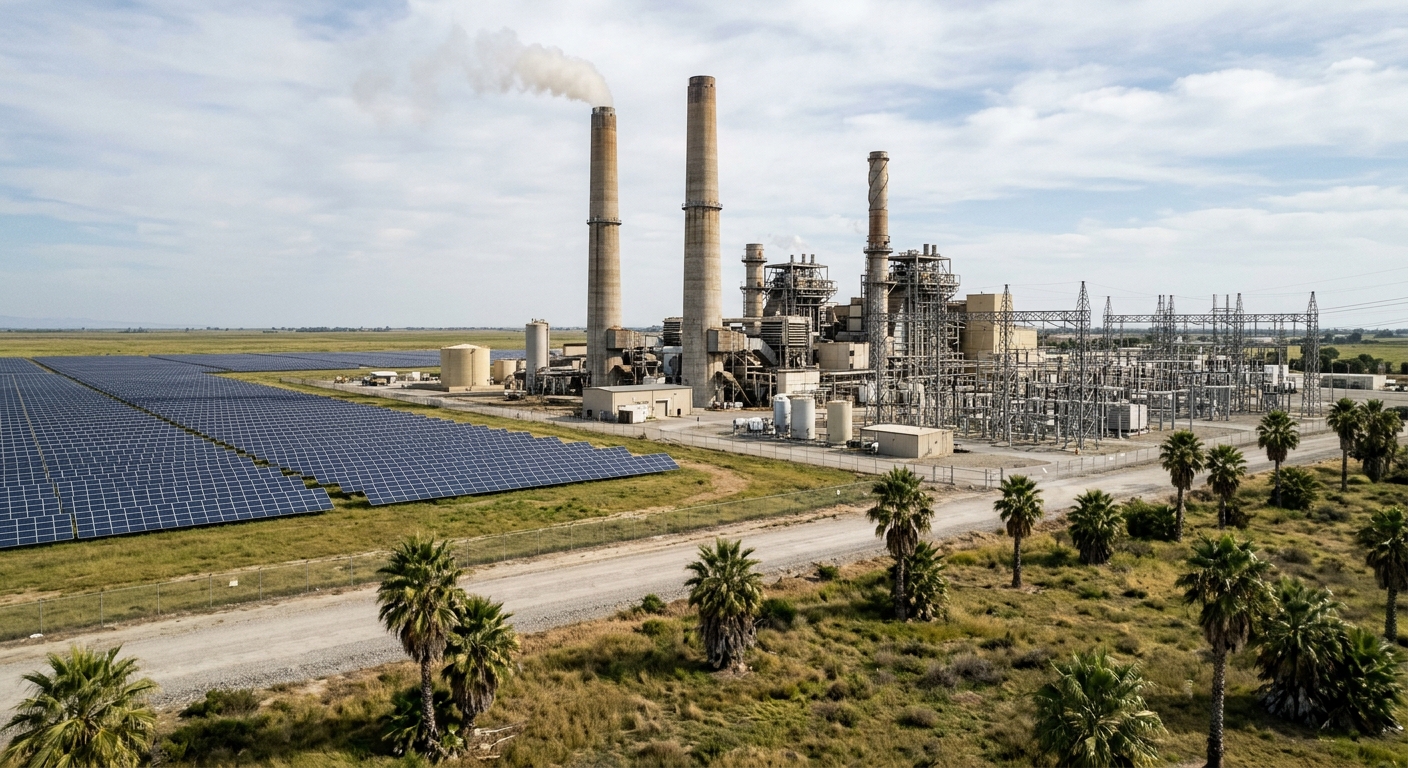
AI-generated illustration; not a photograph of the reported event.
- calendar_today November 23, 2026
Stanton Energy Center’s Coal Unit Continues Operations
The Stanton Energy Center, operated by the Orlando Utilities Commission (OUC), will delay the shutdown of a coal-fired power unit after an emergency order from the U.S. Department of Energy. The plant, located in east Orange County just outside Avalon Park, had originally planned to begin winding down coal operations in 2026 as part of OUC's transition away from coal.
Federal Intervention Halts Coal Shutdown
OUC intended to place one of Stanton’s two coal-fired units—Stanton Unit 1—into extended shutdown at the end of May 2026. However, this plan changed when U.S. Energy Secretary Chris Wright signed an emergency order on June 4, 2026, requiring OUC to keep the unit available. The order was later extended through November 30, 2026, addressing concerns about meeting current energy capacity.
“The Department of Energy said, hey, let’s pump the brakes on this and ensure that we have enough capacity to meet our current needs,” said Orlando Alancastro, OUC’s vice president of transmission.
Data Centers Drive Increased Energy Demand
The Department of Energy’s order highlights the growth of data centers as a major contributor to rising electricity demand. According to the order, Florida’s current resource and transmission expansion is lagging behind what is necessary to support the development of new data centers and large-scale electricity users. As of April 2026, eight new data centers were planned for construction in Florida.
OUC CEO Clint Bullock noted the unprecedented scale of these hyperscale data centers, which are typically operated by major companies such as Google and Amazon. Bullock explained that the growth of these facilities cannot be accurately forecasted using traditional modeling techniques.
Additional Factors Impacting Energy Planning
OUC points to other demand drivers, including faster-than-expected adoption of electric vehicles, increasing manufacturing activity, and limited construction of new power generation facilities statewide. Ongoing weather-related events have also pushed peak energy usage higher. To address this, OUC is raising its reserve margin from 15% to 20% to help guarantee reliable service during high demand periods.
OUC’s Integrated Resource Plan: A New 20-Year Roadmap
Earlier this month, OUC presented its Electric Integrated Resource Plan, outlining a 20-year strategy for meeting the region’s energy needs. Unlike previous versions, the current plan does not eliminate coal from the mix: Stanton Unit 1 is set to come back online in 2028, capable of burning either coal or natural gas after conversion. Stanton Unit 2 would be converted similarly in 2029. No definitive date has been set for fully ending coal use at the Stanton Energy Center.
OUC’s plan includes infrastructure improvements such as adding 150 megawatts of solar energy and 100 megawatts of battery storage by 2035, and projects possible additions like a gas plant with carbon capture and 345 megawatts of nuclear power for the 2040s. These advanced options are treated as placeholders, according to Alancastro.
The utility asserts it is still on track to reduce carbon emissions by 50% by 2030, and 75% by 2040, relative to 2005 levels. The share of coal in OUC’s energy mix has already fallen from 41% in 2019 to 27% in 2025, while solar grew from less than 1% to 11%.
Cost Impacts for Customers
OUC has indicated that the implementation of this plan would increase residential electricity bills by about 1% each year over the next five years. There is a proposed fuel charge reduction that could lower the average residential bill by about $5 per month beginning in April 2027, based on usage of 1,000 kilowatt-hours monthly.
Avalon Park resident Jenna Egensteiner expressed support for cleaner energy, but added that specifics around cost and timing are important to community members.
Public Feedback and Next Steps
OUC is inviting public comments regarding the plan through December 4 at oucfutureplanning.com. The OUC board will vote on both the new resource plan and the proposed fuel charge reduction on December 15.
Source: clickorlando.com.