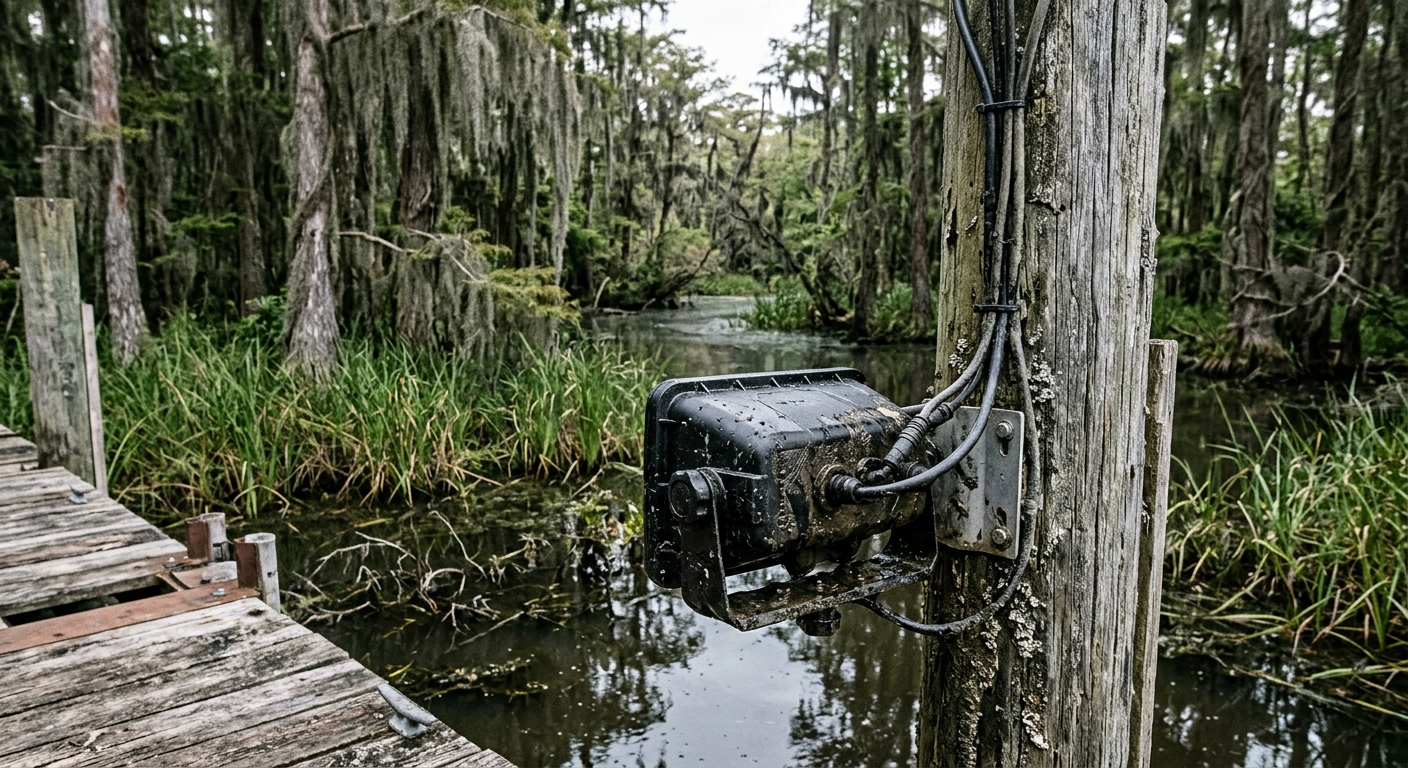
AI-generated illustration; not a photograph of the reported event.
- calendar_today October 28, 2026
Deadly Alligator Attacks Spark Calls for Waterway Safety
In the wake of a recent deadly alligator attack in Winter Garden, Florida, concerns are mounting regarding public safety around the state’s many waterways. This incident, along with other recent encounters, is prompting technological innovation aimed at reducing the risk posed by alligators and crocodiles in populated areas.
WildlifeOS Introduces Croc Alarm Alligator Detection System
Miami-based technology company WildlifeOS is developing a new alligator detection system called Croc Alarm. This system is designed to warn people when alligators or crocodiles are present beneath the water’s surface. Utilizing a combination of sonar imaging and artificial intelligence, Croc Alarm aims to detect hidden reptiles and alert individuals before they get too close.
How Croc Alarm Works: Technology and Features
According to WildlifeOS founder and CEO Rodolfo Saccoman, Croc Alarm will continuously scan underwater environments using active sonar. The data collected is analyzed by artificial intelligence algorithms trained to identify the unique signatures of alligators and crocodiles.
The system will communicate risk levels through easily understandable signals: green for no detected threat, yellow for processing, and red to signal an immediate warning. These signals are provided via visible indicators and alerts sent directly to users’ smartphones. This approach adds an extra layer of waterway safety to existing precautions.
Need for Innovation in Gator Detection Technology
Florida’s abundance of lakes, ponds, canals, and other bodies of water means that encounters with alligators are not uncommon. Recent events, such as the deadly Winter Garden attack and a June incident in Marion County where an 11-year-old was injured while fishing, have highlighted the potential dangers lurking beneath the water’s surface.
Croc Alarm is being hailed as a potential tool for reducing future incidents by providing wildlife warnings to people before they unknowingly approach dangerous animals. The versatility of public safety technology like this could prove vital in areas where alligators are a familiar presence.
Emphasis on Accuracy and Ongoing Development
CEO Rodolfo Saccoman emphasized that WildlifeOS is committed to ensuring the accuracy of the system before making it widely available. “We will never put this device out at scale unless we’re really confident of the accuracy,” Saccoman stated.
Croc Alarm is currently under development, with prototypes and real-world testing planned before a possible rollout next year. Its effectiveness will ultimately depend on reliably distinguishing alligators and crocodiles from other underwater objects and natural conditions.
The Road Ahead for Wildlife Safety Technology
While Croc Alarm holds promise as a means of enhancing waterway safety and reducing the risk of alligator attacks, authorities and developers alike stress that it should not replace established wildlife safety practices at this stage. Until rigorous testing and validation are completed, staying alert and observing existing precautions remain the best defense for alligators Florida residents and visitors.
The broader goal of Croc Alarm—and similar technologies under development—is to provide early gator detection warnings, empowering the public to enjoy Florida’s waterways with greater peace of mind while keeping safety a priority.
Source: clickorlando.com.