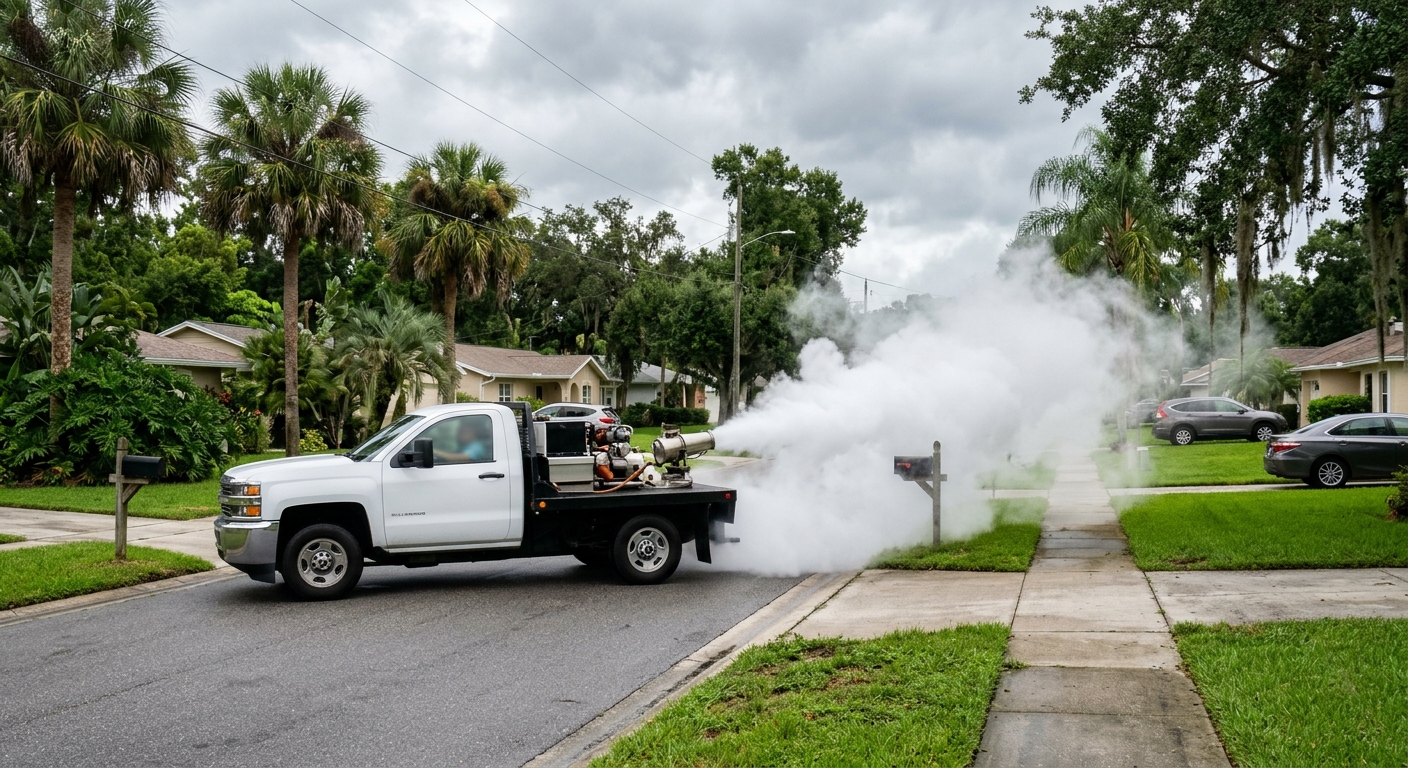
AI-generated illustration; not a photograph of the reported event.
- calendar_today October 26, 2026
Second Locally Acquired Dengue Fever Case Confirmed in Seminole County
The Seminole County health department has confirmed an additional case of locally acquired dengue fever, raising the total number of cases in the county to two. This development comes as Florida experiences a surge in dengue infections, with over 425 locally acquired cases reported across the state in 2026.
Mosquito Control Measures Increase Across Multiple Counties
In response to the growing number of dengue cases, Seminole County has intensified its mosquito control efforts. County officials reported that more than 32,000 acres were fogged last month to target mosquito populations. Additionally, certain areas within the county have received larvicide treatment to address mosquito larvae and further prevent the spread of mosquito-borne illnesses.
Other counties are also taking action. Orange County, which has recorded eight locally acquired cases so far, is conducting aerial spraying operations to reduce mosquito numbers. Similar aerial campaigns are underway in Osceola County as well, demonstrating a coordinated effort among counties to address the uptick in dengue cases.
Statewide Surge: Florida Reports Over 425 Dengue Cases
According to the latest report from the Florida Department of Health, more than 425 cases of locally acquired dengue fever have been documented statewide since the beginning of the year. The report's data, which runs through October 17, does not yet include the new Seminole County cases, indicating that the true total may be slightly higher.
Understanding Dengue Fever and Its Symptoms
Dengue fever is transmitted primarily by the Aedes aegypti mosquito, which is also known for spreading Zika and chikungunya viruses. The illness often presents with flu-like symptoms, including fever, aches, pains, and sometimes a rash. Symptoms typically develop within 15 days of being bitten by an infected mosquito. Officials urge members of the public to be vigilant and seek medical attention if they exhibit dengue symptoms, particularly in areas where locally acquired cases have been reported.
Tips for Mosquito Prevention and Reducing Infection Risk
Health authorities recommend several strategies to decrease the risk of contracting mosquito-borne illnesses like dengue. Residents are encouraged to:
- Drain standing water from items such as buckets, toys, flowerpots, tires, and other containers outside the home, as these can serve as mosquito breeding grounds.
- Repair or replace damaged screens on windows and doors to prevent mosquitoes from entering homes.
- Wear loose-fitting, long-sleeved clothing when outdoors, especially during peak mosquito activity times.
- Use insect repellents containing DEET in accordance with label instructions.
Through community action and individual prevention efforts, local officials aim to stem the rise of dengue fever cases and protect public health as mosquito season continues.
Ongoing Monitoring and Public Awareness
Health departments across Florida continue to monitor mosquito populations and dengue case numbers closely. Residents are advised to stay informed through local health department updates and adhere to recommended mosquito prevention measures. The collaborative response and increased public awareness are viewed as key components in addressing the spread of dengue and other mosquito-borne diseases in the state.
Source: clickorlando.com.