- calendar_today August 10, 2025
Why Florida’s Housing Market Is Stuck in 2025
In a state known for sun, snowbirds, and nonstop real estate action, Florida’s 2025 housing market feels unusually still.
Transaction volume is down. Price growth has flattened. New construction is slowing. And despite the continued influx of new residents from northern states, many Floridians are staying put — or stuck in place.
So what’s going on? Five key statistics reveal why the Sunshine State’s housing market isn’t crashing, but it’s clearly stuck in neutral.
At the heart of Florida’s slowdown is one of the biggest national culprits: elevated interest rates.
As of Q3 2025, average 30-year mortgage rates hover around 7.2% statewide, according to Freddie Mac data. In metro areas like Tampa, Orlando, and Jacksonville, that’s translated into a dramatic jump in monthly costs.
For example, a buyer looking at a $450,000 home in West Palm Beach with 20% down is now facing a monthly principal and interest payment of over $2,500—nearly 40% higher than in 2021.
“Sellers are holding onto their 3% mortgages for dear life,” said Tamika Dawson, a Realtor in Tampa. “And buyers can’t make the math work at these new rates.”
2. Sales Volume Drops 21% Year Over Year
According to Florida Realtors® data, closed home sales statewide are down 21% year-over-year through mid-2025. This includes both single-family homes and condos, with some metros like Naples and Fort Lauderdale seeing even steeper declines.
The drop in activity reflects a market where both sides are waiting—buyers hoping for lower rates or prices, and sellers reluctant to list unless they absolutely must.
Even popular vacation markets like Sarasota and Destin are seeing slower turnover. Investors have pulled back, and second-home buyers are thinking twice before financing in today’s climate.
3. Median Home Price Growth Has Stalled
After years of explosive appreciation, Florida home prices have finally hit a wall.
The statewide median sale price sits at $410,000 in mid-2025—up just 1.2% from the same time last year. In some hot spots like Miami Beach and Naples, prices are actually down 3–5% year over year.
“Prices aren’t crashing, but they’ve hit resistance,” said Juan Castillo, a broker in Miami. “We’re not seeing bidding wars like before, and sellers who overshoot are sitting on the market.”
In affordable pockets like Lakeland or Ocala, prices have held firmer, but appreciation has also cooled to the low single digits.
4. New Listings Fall 19% as Owners Stay Put
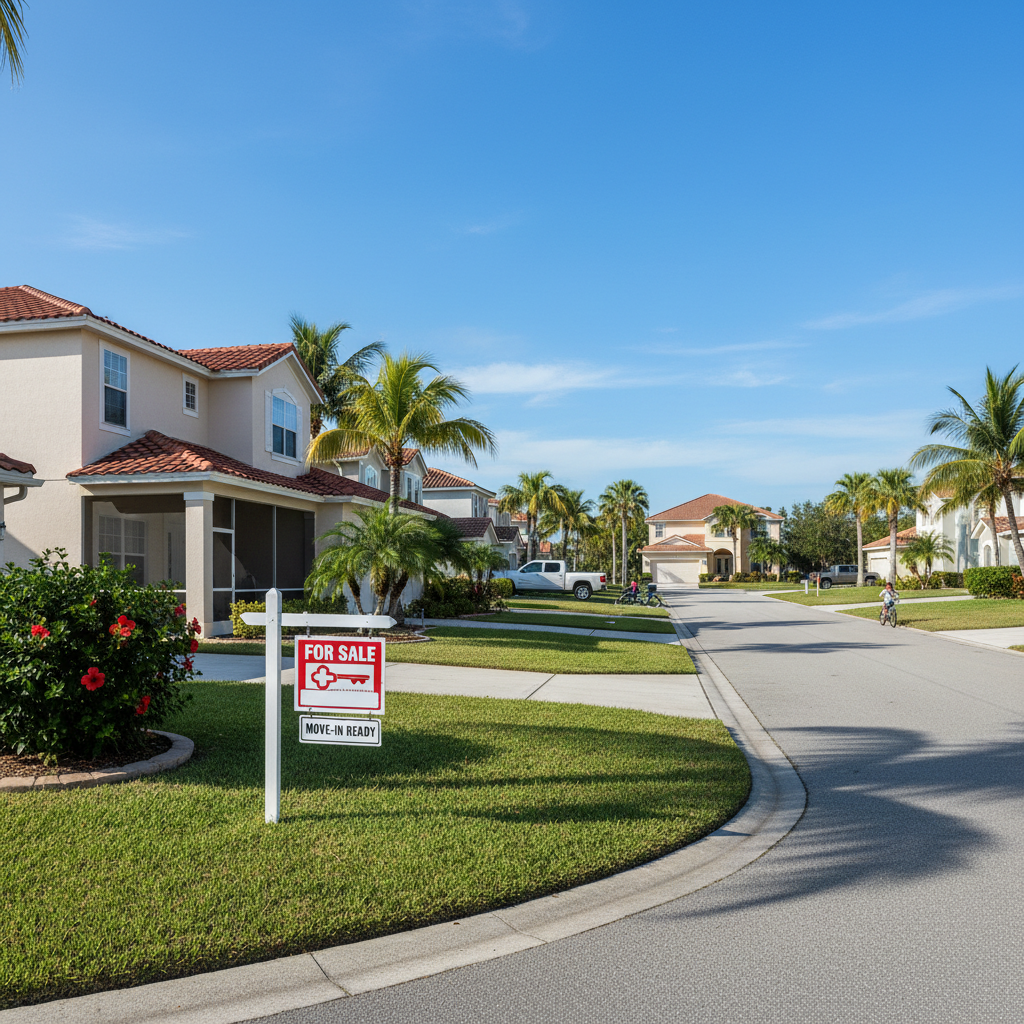
With fewer homes changing hands, it’s no surprise that inventory is drying up. But what’s striking is how sharply new listings have declined—down 19% statewide compared to mid-2024.
This is especially pronounced in suburban areas outside Orlando, Tampa, and Jacksonville, where large numbers of homeowners bought in 2020–2021 and locked in ultra-low interest rates. Most have little incentive to move unless forced by job change or divorce.
“We call it the ‘golden handcuffs effect,’” said Sherri Goodman, a St. Petersburg-based agent. “People are stuck with low-rate mortgages they can’t afford to give up.”
This listing drought is creating frustration for buyers, especially first-timers, who feel they’re choosing from leftovers or overpaying for homes in mediocre condition.
5. Investor Purchases Drop 30% — Especially in Vacation Markets
Florida has long been a favorite for real estate investors, from Airbnb hosts to hedge funds. But in 2025, that tide is receding.
Investor purchases are down 30% year-over-year, with sharp pullbacks in areas like Kissimmee, Cape Coral, and Panama City. Rising insurance premiums, tighter short-term rental regulations, and declining ROI have cooled enthusiasm.
Meanwhile, the state’s new property tax rules and insurance hikes have made it harder for out-of-state landlords to turn a profit — especially if they’re relying on vacation rental income.
“Investors are shifting their focus to more predictable long-term rentals,” said Glenn Patel, a Miami property manager. “The Airbnb gold rush is definitely over.”
Why Florida Isn’t in a Crash—Yet
Despite the slowdown, Florida isn’t headed for a 2008-style collapse. Here’s why:
- Population growth remains strong: Florida added nearly 300,000 residents in 2024 alone, thanks to migration from the Northeast and Midwest.
- Inventory is tight: With few distressed sellers and cautious homebuilders, oversupply isn’t a problem.
- Labor market resilience: Job growth in healthcare, logistics, and construction is keeping local economies afloat, especially in Central Florida and the I-4 corridor.
This means that while the market is stuck, it’s not broken. It’s a correction — not a crash.
What Could Unfreeze the Market in Late 2025?
Several factors could trigger renewed housing activity later this year or into 2026:
- Fed rate cuts: If inflation eases and the Fed lowers rates, expect a surge in refinancing and listing activity.
- Insurance reform: Changes to Florida’s property insurance system could ease affordability pressures.
- Down payment assistance programs: State and federal incentives could bring first-time buyers off the sidelines.
- Investor re-entry: Stabilizing rents and regulatory clarity might draw institutional buyers back.
But none of these are guaranteed. And even if they happen, recovery is likely to be gradual and uneven across regions.
The Florida Outlook: Prepare, Don’t Panic
If you’re a buyer in Florida in 2025, this might be your chance to get into a less-competitive market. But stay realistic on pricing, and get pre-approved to act quickly if a good deal emerges.
If you’re a seller, understand that pricing aggressively might backfire. Homes that sit too long become stigmatized—even in beach towns.
For investors, look beyond short-term rentals and explore long-term rental stability in university towns, growing suburbs, or military-heavy markets like Pensacola.
Florida’s housing market isn’t crashing. It’s cooling, correcting, and recalibrating. The Sunshine State is still a magnet for growth—but in 2025, patience and smart positioning are the keys to real estate success.